





The Future of AI in HEOR Is Not Just Automation, it’s Accountability: Insights from ISPOR Europe 2026
November 19, 2026
Artificial intelligence (AI) is reshaping health economics and outcomes research (HEOR), with applications ranging from evidence synthesis and health technology assessment (HTA) to real-world evidence generation and economic modeling. But where is AI research currently concentrated, and which applications are gaining momentum?
At ISPOR Europe 2026, research reflected growing interest in large language models (LLMs), generative AI, and agentic systems, alongside more established machine learning approaches.
To explore these trends, we analyzed 56 AI-related posters, classifying their research applications, AI technologies, therapeutic areas, and evaluation methodologies. The analysis provides a snapshot of emerging approaches and the scientific challenges associated with integrating AI into HEOR.
AI in HEOR: From predictive models to evidence generation
Within our curated collection of 56 AI-related posters from ISPOR Europe 2026, research extended beyond traditional predictive modeling. Systematic and targeted literature reviews (SLRs/TLRs) were the most frequently represented application, accounting for 18 posters (32%), followed by HTA and Joint Clinical Assessment (JCA), with 16 posters (29%), and real-world evidence (RWE), with seven posters (13%).
Across the analyzed research, 32 posters actively applied AI to research or operational workflows, while others examined methodological considerations, governance, reporting standards, and the implications of AI adoption.
LLMs and generative AI were particularly prominent, appearing in 19 of the 32 applied-AI studies. Agentic and multi-agent architectures also emerged, reflecting interest in moving from individual AI-assisted tasks toward more integrated workflows.
FIGURE 1: AI Research Applications by Therapeutic Area

An interesting finding was the prevalence of research without a specific therapeutic-area focus. While oncology, dermatology/immunology, neurology, and cardiovascular diseases were represented, many studies investigated methodologies intended to work across different clinical indications.
The presence of disease-agnostic studies suggests that the research in this collection addresses not only disease-specific solutions, but also generalizable approaches to evidence generation in HEOR.
A closer look: AI for systematic literature reviews
Given their prominence in the research landscape, we examined the 18 posters focused on SLRs and TLRs in greater detail.
Two applications stood out: literature screening and data extraction, each investigated in eight posters. These activities represent some of the most resource-intensive stages of evidence synthesis, making them natural targets for AI-assisted automation.
However, the research also highlighted important differences in how these solutions are evaluated. Reported screening sensitivity, extraction accuracy, and completeness varied across studies, while performance was not always measured using comparable methodologies.
FIGURE 2: AI Applications in SLRs by Therapeutic Area

Therapeutic-area analysis showed that several studies evaluated AI using specific clinical indications, including oncology, dermatology/immunology, neurology, and infectious diseases. Others investigated disease-agnostic workflows intended for broader application.
Beyond screening and extraction, research addressing quality appraisal, methodological validation, and governance was less prominent. Yet these activities remain essential for ensuring that AI-generated evidence is sufficiently reliable, reproducible, and transparent for healthcare decision-making.
What comes next for AI in HEOR?
The research presented at ISPOR Europe 2026 illustrates a shift toward AI-enabled evidence generation, particularly through LLMs and increasingly integrated workflows. However, greater automation does not automatically translate into better evidence.
As AI becomes embedded in literature reviews, HTA submissions, and economic modeling, more research is needed on validation, benchmarking, governance, and human oversight. Establishing standardized evaluation frameworks will be essential to assess accuracy, completeness, reproducibility, and reliability across different methodologies and clinical applications.
Another emerging challenge is the cognitive overload experienced by subject matter experts responsible for reviewing AI-generated outputs. As automated workflows increase the volume and speed of evidence generation, human-in-the-loop approaches risk shifting the workload from producing evidence to continuously verifying it. Addressing this challenge will require smarter oversight mechanisms, risk-based review strategies, and AI systems that help experts prioritize their attention rather than simply generating more content to assess.
Ultimately, the next phase of AI in HEOR will not be defined only by how much we can automate, but by how effectively we can validate AI-generated evidence, maintain scientific accountability, and design human–AI workflows that enhance rather than overwhelm expert decision-making.
Methodology: This analysis covers 56 unique AI-related posters from a curated ISPOR Europe 2026 collection, including 18 classified primarily as SLR/TLR research. It is not an analysis of the entire congress scientific program. Application and therapeutic-area classifications may overlap.
Share Via


Subscribe to our newsletter
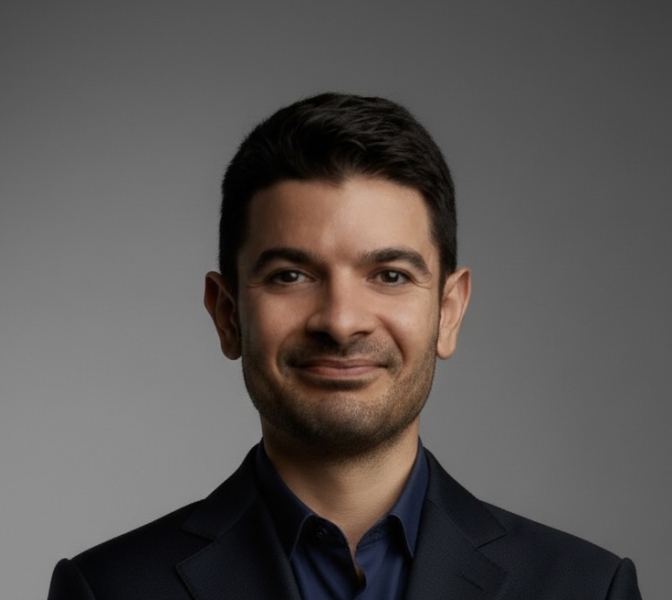
Manuel Cossio
Head of AI Solutions, Real-World Evidence, Value, and Access
Manuel Cossio is Head of AI Solutions, Real-World Evidence, Value, and Access at Cytel. Manuel is an AI engineer with over a decade of experience in healthcare AI research and development. He currently leads the creation of generative AI solutions aimed at optimizing clinical trials, focusing on hierarchical multi-agent systems with multistage data governance and human-in-the-loop dynamic behavior control.
Manuel has an extensive research background with publications in computer vision, natural language processing, and genetic data analysis. He is a registered Key Opinion Leader at the Digital Medicine Society, a member of the ISPOR Community of Interest in AI, a Generative AI evaluator for the EU Commission, and an AI researcher at UB-UPC- Barcelona Supercomputing Center.
He holds an M.Sc. in Translational Medicine from Universitat de Barcelona, a Master of Engineering in AI from Universitat Politècnica de Catalunya, and a M.Sc. in Neuroscience from Universitat Autònoma de Barcelona.
Read full employee bioClaim your free 30-minute strategy session
Book a free, no-obligation strategy session with a Cytel expert to get advice on how to improve your drug’s probability of success and plot a clearer route to market.
