





The Evolving Role of AI in Oncology: Insights from ESMO 2026
October 30, 2026
Artificial intelligence (AI) is transforming oncology research, with applications ranging from biomarker discovery and survival prediction to clinical decision-making and clinical trial automation. But how is AI actually being used in oncology, and which technologies are gaining attention?
At the European Society for Medical Oncology (ESMO) Congress 2026 in Madrid, AI-related research reflected an evolving landscape. Traditional machine learning and deep learning remained prominent, while large language models (LLMs), foundation models, and agentic AI introduced new opportunities for clinical research and evidence generation.
To explore these trends, we analyzed 255 AI-related congress records, including 153 posters, 57 ePosters, and 45 scientific programme items identified through screening. Presentations were classified according to their research applications, AI technologies, and oncology therapeutic areas.
AI is moving beyond predictive modelling
Predictive modelling remains a major application of AI in oncology. Across the congress, 55 presentations focused primarily on predicting survival, treatment response, prognosis, or toxicity, while 21 investigated biomarker discovery.
However, AI research is increasingly extending beyond prediction. Another 32 presentations addressed validation, benchmarking, or safety, while 77 covered broader methodological and implementation topics.
Figure 1: Distribution of AI research applications at ESMO 2026, segmented by oncology therapeutic area


Lung and breast cancer were the most frequently represented identifiable therapeutic areas, with 32 and 27 presentations, respectively, followed by prostate and colorectal cancer, with 14 each. These areas showed considerable interest in predictive modelling, imaging, and biomarker development.
The distribution suggests that researchers are increasingly investigating not only what AI can predict, but also how its outputs can support clinical decisions and research workflows.
From deep learning to foundation models and AI agents
The technologies presented at ESMO 2026 illustrate another important transition.
Traditional machine learning continues to support clinical prediction and risk stratification, while computer vision and deep learning remain important for medical imaging, digital pathology, and biomarker quantification.
Meanwhile, foundation models and agentic AI are expanding into applications involving unstructured clinical information. Our analysis identified 26 presentations primarily classified as language foundation models and 12 as LLM agents.
Figure 2: Distribution of AI technologies presented at ESMO 2026, segmented by oncology therapeutic area

Several studies investigated agentic systems for extracting information from electronic health records, supporting molecular tumor boards, identifying eligible patients for clinical trials, and automating clinical documentation.
Other research explored synthetic cohorts, computational simulations, and AI-assisted evidence synthesis.
These applications represent a shift from developing models that generate isolated predictions toward AI-enabled workflows capable of supporting multiple steps of the research process.
Clinical validation will determine the next phase
As AI applications become more sophisticated, their clinical reliability becomes increasingly important.
ESMO 2026 included dedicated discussions of AI validation, interpretability, and governance, including ESMO guidance on LLMs in clinical practice (ELCAP) and requirements for AI-based biomarkers (EBAI).
These developments highlight a fundamental challenge: demonstrating technical performance is not equivalent to demonstrating clinical utility.
For predictive models, external validation, generalizability, and interpretability remain essential. For LLMs and agentic systems, additional challenges include hallucinations, reproducibility, traceability, and human oversight.
The next phase of AI adoption will therefore depend on combining technological capabilities with rigorous scientific validation and controlled implementation.
What comes next?
ESMO 2026 illustrates how AI in oncology is evolving from predominantly predictive applications toward a broader ecosystem of foundation models, agentic workflows, and multimodal technologies.
However, more sophisticated AI does not automatically translate into better research or clinical outcomes.
The real opportunity lies in selecting the appropriate technology for each problem, combining AI with established analytical methods, and ensuring that outputs remain reliable, reproducible, and clinically meaningful.
The future of AI in oncology will not be defined by how much AI we use, but by how effectively it improves evidence generation, clinical decision-making, and patient care.
Contact Us!Share Via


Subscribe to our newsletter
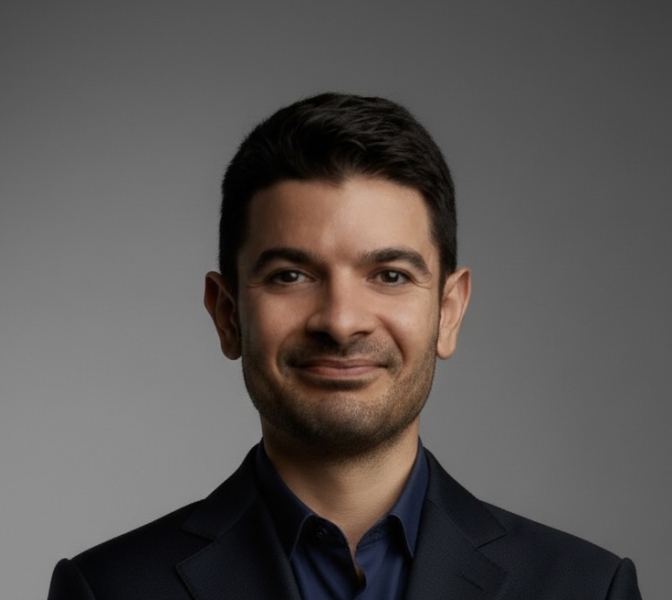
Manuel Cossio
Head of AI Solutions, Real-World Evidence, Value, and Access
Manuel Cossio is Head of AI Solutions, Real-World Evidence, Value, and Access at Cytel. Manuel is an AI engineer with over a decade of experience in healthcare AI research and development. He currently leads the creation of generative AI solutions aimed at optimizing clinical trials, focusing on hierarchical multi-agent systems with multistage data governance and human-in-the-loop dynamic behavior control.
Manuel has an extensive research background with publications in computer vision, natural language processing, and genetic data analysis. He is a registered Key Opinion Leader at the Digital Medicine Society, a member of the ISPOR Community of Interest in AI, a Generative AI evaluator for the EU Commission, and an AI researcher at UB-UPC- Barcelona Supercomputing Center.
He holds an M.Sc. in Translational Medicine from Universitat de Barcelona, a Master of Engineering in AI from Universitat Politècnica de Catalunya, and a M.Sc. in Neuroscience from Universitat Autònoma de Barcelona.
Read full employee bioClaim your free 30-minute strategy session
Book a free, no-obligation strategy session with a Cytel expert to get advice on how to improve your drug’s probability of success and plot a clearer route to market.
