





Living Evidence and the Rise of AI-Enabled HEOR Infrastructure: Insights from ISPOR Philadelphia
May 28, 2026
The ISPOR US 2026 conference in Philadelphia drew together colleagues and industry partners across evidence, value, and access. Across the presentations and sessions, a major theme emerged: we are an industry moving rapidly from AI experimentation and toward AI-enabled infrastructure. Here we share some of the key takeaways.
AI becomes core infrastructure
The strongest signal from ISPOR Philadelphia was that AI is no longer viewed as a side tool for productivity gains. Across HEOR, HTA, and RWE, organizations are beginning to embed AI directly into evidence generation and submission workflows. Discussions focused less on experimentation and more on operationalization, governance, and scalability.
AI is now being explored across the full evidence lifecycle, including systematic literature reviews, economic modeling, patient-reported outcomes, HTA submissions, payer communication, and regulatory documentation. The industry appears to be shifting toward continuously learning evidence systems rather than static, project-based workflows.
Agentic AI moves beyond simple automation
One of the biggest themes was the emergence of agentic AI systems. Instead of using isolated prompts, organizations are experimenting with coordinated AI agents that can generate models, review outputs, create documentation, and prepare evidence packages.
Several workshops demonstrated how AI can move from model concept to full implementation in both R and Excel while maintaining human oversight. The emphasis throughout was not full autonomy, but “human-at-the-helm” governance where AI accelerates and supports execution while experts retain accountability.
This reflects a broader transition from AI-assisted work toward AI-orchestrated workflows.
AI-supported SLRs reach a turning point
AI-assisted systematic literature reviews (SLRs) dominated the conference agenda. However, the conversation has evolved significantly from earlier discussions focused mainly on efficiency gains.
The field is now grappling with questions around reproducibility, transparency, benchmarking, and governance. Multiple sessions highlighted the lack of shared standards for evaluating AI-SLR performance and proposed industry-wide benchmarking frameworks and validation challenges.
ISPOR itself is increasingly positioning itself as a central body for developing good-practice guidance and methodological standards for AI-enabled evidence synthesis, with the anticipated publication of the GenAI in SLR taskforce report.
Regulatory readiness becomes critical
Another major theme was regulatory credibility. Panels focused heavily on FDA, EMA, NICE, and Health Canada guidance regarding AI-assisted evidence generation and real-world data curation.
The industry discussion has shifted from asking whether regulators will engage with AI-generated evidence to determining what documentation, validation, and governance standards will be required for acceptance.
Speakers repeatedly emphasized auditability, traceability, reproducibility, and version control as foundational requirements for regulatory-grade AI workflows.
Real-world data and AI converge
Many sessions positioned AI as the enabling layer needed to unlock the value of modern real-world data. Much of healthcare’s most clinically meaningful information remains trapped in unstructured formats such as clinician notes, pathology reports, and medical charts.
AI methods including NLP and machine learning are increasingly being used to transform this information into structured, research-ready evidence. This was especially prominent in sessions involving medical devices, exploratory evidence planning, and dynamic evidence generation strategies.
AI is increasingly being viewed not simply as an analytics tool, but as foundational infrastructure for modern RWE generation.
Patient voice gains new attention
Several workshops explored how large language models and conversational AI can support patient-centered research. These applications included free-text analysis, conversational patient interviews, social media analysis, and narrative symptom capture.
The interest in AI application in qualitative research represents an important expansion beyond traditional structured analytics. Researchers are now exploring whether AI can preserve the nuance of lived patient experience while enabling scalability.
At the same time, concerns around hallucination risk, construct validity, and bias remain central to these discussions.
HEOR leadership roles are evolving
As AI automates more technical tasks, the role of HEOR and RWE leaders appears to be changing. Multiple sessions suggested that future leadership value will increasingly center on governance, strategic interpretation, stakeholder trust, and organizational coordination.
Rather than replacing experts, AI may elevate the importance of human judgment and scientific oversight. Organizations will need leaders who can balance innovation with credibility in payer and regulatory environments.
This suggests AI adoption is not simply a technology challenge, but an organizational transformation challenge.
Responsible AI emerges as the central principle
Across nearly every session, the same themes repeatedly appeared: transparency, reproducibility, validation, governance, and human oversight.
The HEOR community appears to be converging around a shared understanding that AI adoption will only succeed if scientific credibility and integrity remain intact. The conversation is no longer about replacing traditional rigor, but about scaling evidence generation responsibly.
ISPOR Philadelphia ultimately showed an industry moving rapidly from AI experimentation toward AI-enabled infrastructure. The next phase of HEOR will likely be defined by organizations that can operationalize AI while maintaining trust, methodological rigor, and decision relevance.
Contact Us!Share Via


Subscribe to our newsletter
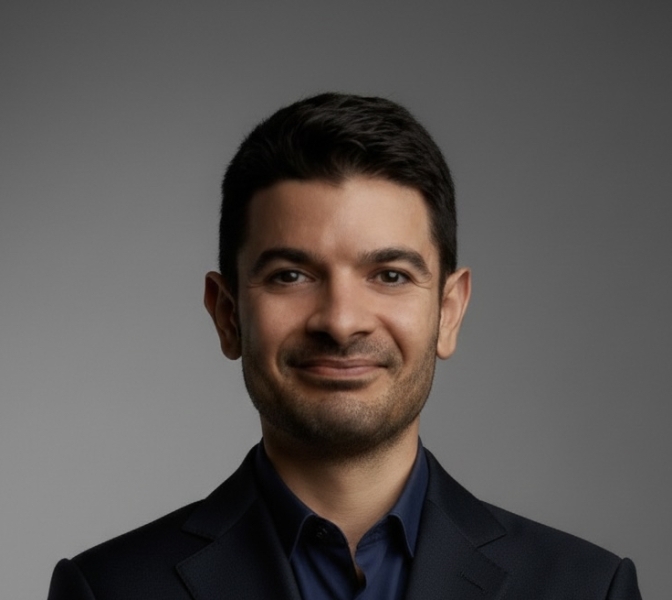
Manuel Cossio
Head of AI Solutions, Real-World Evidence, Value, and Access
Manuel Cossio is Head of AI Solutions, Real-World Evidence, Value, and Access at Cytel. Manuel is an AI engineer with over a decade of experience in healthcare AI research and development. He currently leads the creation of generative AI solutions aimed at optimizing clinical trials, focusing on hierarchical multi-agent systems with multistage data governance and human-in-the-loop dynamic behavior control.
Manuel has an extensive research background with publications in computer vision, natural language processing, and genetic data analysis. He is a registered Key Opinion Leader at the Digital Medicine Society, a member of the ISPOR Community of Interest in AI, a Generative AI evaluator for the EU Commission, and an AI researcher at UB-UPC- Barcelona Supercomputing Center.
He holds an M.Sc. in Translational Medicine from Universitat de Barcelona, a Master of Engineering in AI from Universitat Politècnica de Catalunya, and a M.Sc. in Neuroscience from Universitat Autònoma de Barcelona.
Read full employee bio
Dalia Dawoud
Research Principal, HTA Policy and Strategy
Dalia Dawoud is Research Principal, HTA Policy and Strategy at Cytel. Prof. Dawoud holds an MSc in economic evaluation in healthcare (City University London) and a PhD in pharmaceutical policy and economics (King’s College London) and has practiced as health economist and researcher for over 20 years. Her work is largely focused on the application of health economics and outcomes research (HEOR) in HTA and clinical guideline development. Prior to joining Cytel Inc., she worked at leading organizations including NICE, where was the founding Associate Director of the newly established NICE HTA Innovation Laboratory (HTA Lab) with projects in the areas of RWE, HTA methods, and health economics, focusing on managed access, evaluating emerging therapies, such as dementia treatments and multi-indication diagnostics, and the use of AI in economic modelling. She also led a portfolio of HORIZON Europe projects such as HTx, SUSTAIN HTA, and EDiHTA, with combined funding of over 5 million euros. Dalia also worked at the Royal College of Physicians – London and King’s College London among other academic institutions.
She is widely published in the area of HEOR, HTA, and pharmacy policy and serves as Associate Editor of the ISPOR journal Value in Health, was recently elected as Director of the HTAi Board (2026–2029), and served as Director on ISPOR Board of Directors (2023–2026). She is also a member of ISPOR AI Working Group, Living HTA Working Group, and ISPOR Task Force on using GenAI in systematic reviews. She also holds Professor position at the Faculty of Pharmacy, Cairo University.
Read full employee bioClaim your free 30-minute strategy session
Book a free, no-obligation strategy session with a Cytel expert to get advice on how to improve your drug’s probability of success and plot a clearer route to market.
